Acupressure mat: what it is, what it is for and how it works
What is an acupressure mat and how does the Mysa mat work
Use it once and you will never separate from it!
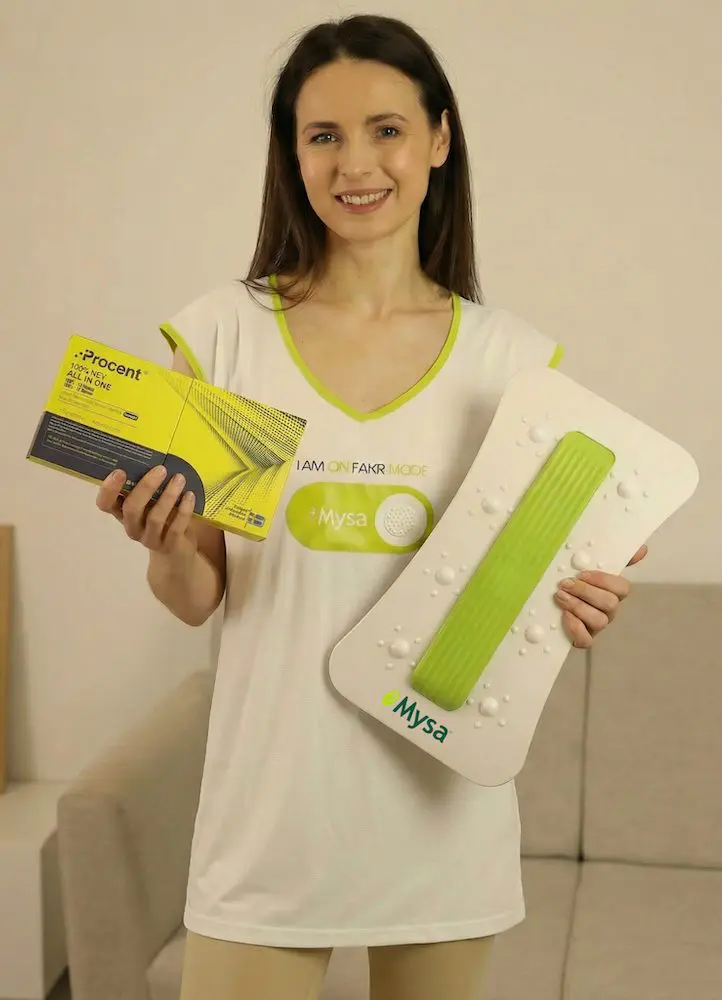
The Mysa acupressure mat is a soft mat measuring 75 × 45 cm, 4 cm thick, 580 grams, covered with 210 non-toxic plastic flowers of 33 pyramidal spikes each, 6,930 Mysa-design spikes in total, on plant-fibre padding.
Lying on it with a bare back for 20 to 30 minutes, the spikes stimulate the skin receptors across the whole back: the body responds with an increase in local circulation (the warmth you feel after 1-2 minutes), with the release of β-endorphins, the natural painkillers, and with a drop in heart rate and cortisol typical of relaxation.
It is used for back and neck pain, muscle tension, stress, difficulty falling asleep and microcirculation. Designed in Sweden, it is a Class I CE medical device registered in EUDAMED (GMDN 35503), and the only acupressure mat tested in a randomised clinical trial (University of Padua, 2021).
Use it once, and you’ll always have it with you
With Mysa, you feel good: many people lie on the mat for a few minutes simply to give themselves a moment of relaxation, release tension in body and mind, and think about nothing but themselves for a while. Nobody knows what an acupressure mat is better than those who invented it in its modern form: us.
It is a soft mat fitted with special tips that, through the countless therapeutic properties of acupressure and reflexology, can help relieve stress and fatigue, reduce muscle tension in the neck, shoulders and back, boost blood and lymph circulation and facilitate sleep.
Many of our customers, however, lie on their Mysa acupressure mat simply to enjoy moments of deep relaxation, relieve physical and mental tension and devote a little time just to themselves…
The authentic Swedish Mysa
The only one: CE medical device
The only one approved by European clinical trials
Mysa is always with you
Do as the Swedes do: Choose Mysa!
Many of our customers, however, lie on their Mysa acupressure mat simply to enjoy moments of deep relaxation, relieve physical and mental tension and devote a little time just to themselves…
According to the principles of acupressure, when our mat’s tips (made exclusively with non-toxic and non-allergenic materials) press on your bare back, they make the nervous system send a series of impulses to the brain via the spinal cord, triggering the release of endorphins and oxytocin.
Endorphins are commonly known as the “hormones of wellbeing” as they are capable of blocking the transmission of pain signals, thereby generating a sensation of wellbeing and reducing muscle and joint pain. Oxytocin is instead known as the “hormone of love and serenity” since it brings about a feeling of general calmness along with a mild drowsiness (which can be of great help against stress, fatigue and sleep disorders).
Acupressure also boosts blood and lymph circulation, resulting in an increased inflow of blood to muscles and organs (beneficial against poor blood circulation, cellulite, etc.).
What happens on the mat
What happens when you lie on your Mysa mat?
15 minutes: The pressure exerted by the tips on the body stimulates the release of endorphins and oxytocin.
20-30 minutes: Stress levels decrease, sleep is facilitated, physical and mental tension melts away and there is a marked improvement in blood and lymph circulation.
Over 45 minutes: Analgesic effect. By this time, the pain-relieving benefits of acupressure should begin to be felt. Many users experience decreased pain, boosted metabolism and relief from inflammation.

A huge success among its users that is only now being analyzed scientifically.
Mats and Pillows
Its good effects
Let us try to explain what lies beneath the health benefits enjoyed by the thousands of users of our Mysa acupressure mats and pillows.
It all started some years ago with the “rediscovery” of the acupressure mat invented in the 1970s by the Russian Ivan Kuznetsov. Such mat was modified (new materials and a new tip design) and re-launched in Sweden in 2006.
Mysa represents the final stage of development of the spike mat. Its exclusive tip design and layout, the careful choice of materials, the many available models and the possibility to use it in conjunction with other natural therapies greatly enhance its health benefits, placing it head and shoulder above its competitors.
Unsurprisingly, this has resulted in an enormous success that has caught the eye of numerous health professionals—from physicians to practitioners of natural therapies. And, finally, several studies have analyzed the spikemat phenomenon from a medical/scientific standpoint.
Initial explanations of its effectiveness have ranged from the placebo effect to the gate control theory, from the stimulation of the body’s meridians to the benefits typical of reflexology. More recently, numerous independent studies have been carried out by some of the world’s most prestigious universities and their results are beginning to be published.
It must be stressed, however, that those who are familiar with reflexology, acupressure, acupuncture and all other natural therapies recognize the therapeutic potential of our Mysa mats and pillows by merely looking at them. Immediately, intuitively.
How an acupressure mat is made
| Part | Mysa | Why it matters |
|---|---|---|
| Spikes | 210 flowers of 33 pyramidal spikes each, 6,930 spikes in total, Mysa design, in non-toxic hypoallergenic plastic | The number and shape of the spikes decide the pressure per cm²: many spikes spread the weight, none pierces the skin (the Kuznetsov principle) |
| Attachment | Flowers heat-welded to the cover, not glued | They don’t come off with use or washing |
| Padding | MySalus plant fibre; organic spelt husk in the pillow; no foam, latex or glue | It gives the “Density Balance”: the back sinks just enough for all the spikes to work together |
| Cover | Cotton, removable and hand-washable | Hygiene over time |
| Size | Standard 75 × 45 × 4 cm, 580 g; XXL version for legs, back and neck in one session | Covers the whole back, from shoulders to sacrum |
| Variants | Original; Magnetic with 16 biomagnets; Thermo with heatable pillow; Ergono with Hot ErgonoPad lumbar corrector | 12 models, one for each condition |
What happens to the body, minute by minute
- 0-2 minutes: the spikes press on thousands of points; the skin reacts with local vasodilation and you feel warmth (hyperaemia, measured by Mikelsone 2014).
- 2-10 minutes: the nervous system responds to the stimulus by releasing β-endorphins, peaking in the first minutes (Mikelsone 2014); heart rate drops and heart rate variability rises, a sign of parasympathetic activation (Olsson 2011).
- 10-20 minutes: the muscles relax, pain perception decreases; salivary cortisol tends to fall (Olsson 2011).
- After 20-30 minutes a day for 2-4 weeks: reduction in chronic neck and back pain measured in the studies (Kjellgren 2011, Hohmann 2012, Frizziero 2021).
The role of oxytocin, often cited for the sense of calm, is a hypothesis of the Swedish researchers not yet measured directly on the mat. All the studies.
What it is for: the conditions it is used for
With clinical evidence: chronic low back pain (Padua study 2021), chronic neck and back pain (Hohmann 2012, Kjellgren 2011), relaxation and stress (Olsson 2011), microcirculation (Mikelsone 2014).
From user experience, reported by users and in the 2026 Mysa survey of 312 customers: sleep, cellulite and leg circulation, contractures, fatigue, tension headaches. For each condition there is a model and a dedicated page: the list is below.
Who it is not for
Pregnancy, clotting disorders or anticoagulants, lesions or skin diseases in the contact area, serious heart conditions; under 10 years old only under medical supervision. In case of acute or radiating pain, see a doctor first.
By Annika, Mysa · Updated 6 November 2026
Frequently asked questions
Does the acupressure mat hurt?
For the first 1-2 minutes you feel intense pressure that turns into warmth; it does not injure the skin because the weight is spread over thousands of spikes. In the first days you can use it with the Mysa t-shirt supplied.
How long each day?
20-30 minutes; in the studies from 15 to 60 minutes. No more than 14 consecutive days without a break of a few days.
What results are proven?
Reduction in chronic back and neck pain, measurable relaxation, increase in microcirculation and β-endorphins (studies 2011-2021).
What is the difference between an acupressure mat and a spike mat?
None: they are two names for the same thing. “Spike mat” or “bed of nails” translates the Swedish spikmatta.
Is Mysa different from other mats?
Heat-welded 33-spike pyramidal flowers, plant-fibre padding, removable cover, registration as a CE medical device, randomised clinical trial: these are the points that set it apart.