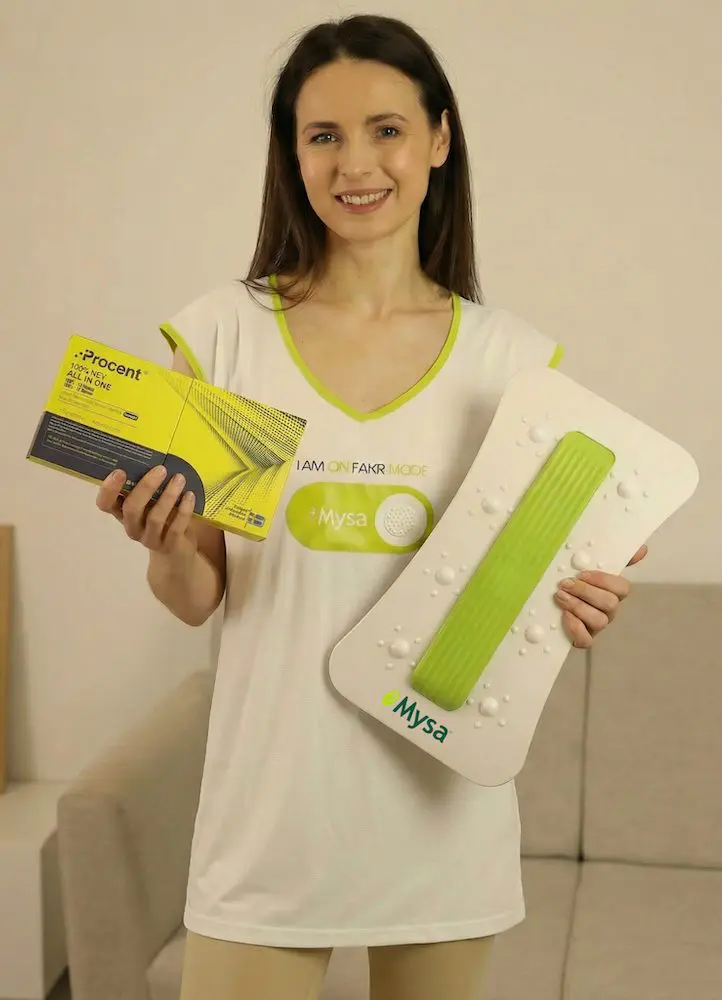
Does the acupressure mat really work? What the research says
STUDIES AND RESEARCH
Does the acupressure mat really work? What the scientific research says
Yes: for chronic musculoskeletal pain there is clinical evidence. A randomised controlled study of the University of Padua, published in 2021 in Applied Sciences (Frizziero et al., DOI 10.3390/app11115211), followed 44 patients with chronic low back pain: those who added the Mysa acupressure mat to therapeutic exercise obtained a reduction in pain on the VAS scale that exercise alone did not produce, with benefits on disability and quality of life especially in the medium to long term, and no adverse effects.
Five other European studies, from 2011 to 2014, confirm effects on neck and low back pain, relaxation, sleep and microcirculation. The Mysa mat is the only acupressure mat used in a published randomised clinical study and is registered as a CE Class I medical device.
We know who we are: we invented and perfected the modern acupressure mat, and we did not need an official confirmation. We see it every day in the words of the people who use it and in the pain specialists who rely on it in rehabilitation centres and clinics.
But we know how much, for you, scientific proof weighs when choosing between the authentic Mysa and the copies – pretty, yes, but unable to claim these studies. The back is yours. Here is what science has measured, on Mysa.
You read that right: no other acupressure tool is recognised as a medical device and backed by a published randomised clinical study. Mysa is the only one.
The effectiveness of Mysa is scientifically proven.
Since June 2021, thanks to a university clinical study.
To be honest, we at Mysa did not need these official certifications… We receive confirmation every day of the greater therapeutic capacity of our authentic Mysa, from the testimonials of those who use it and from the pain specialists who use it successfully in rehabilitation centres and clinics.
But we understand how, for you, this scientific evidence is a decisive confirmation when choosing the authentic Mysa for your health rather than some copy or similar product from the competition which, by contrast, cannot claim any such clinical evidence (many of them… not even remotely).
THE SCIENTIFIC CLINICAL STUDY THAT PROVES THE EFFECTIVENESS OF MYSA:
The study proves the effectiveness of our Mysa, and only of our Mysa: an authentic Mysa was used in the study, and what matters is that the results, besides being decidedly flattering, were demonstrated for the treatment of chronic low back pain, the most stubborn and persistent kind (“chronic LBP present for more than three months“)!
This important study was carried out over more than three years by the prestigious Department of Physical and Rehabilitation Medicine of the University of Padua, with researchers selected from several major clinical centres, including the Rehabilitation Medicine Centre of Parma University Hospital and the Santa Lucia Foundation IRCCS in Rome.


The study was also approved by the Ethics Committee for clinical studies of the University of Padua, protocol no. 4084/AO/17.
As further confirmation of its importance, the study has been published in several prestigious journals and research databases: in June 2021 also in the European Journal of Physical and Rehabilitation Medicine.
The study has also been officially presented in Stockholm and London, and its presentation has been submitted to several international medical congresses!
Our Mysa mat is registered as a Class I Medical Device and is listed in EUDAMED, the European database of approved medical devices.
Here is the study:
“Efficacy of an Acupressure Mat in Association with Therapeutic Exercise in the Management of Chronic Low Back Pain: A Prospective Randomized Controlled Study”
To read it, click here:
mysa’s effectiveness is scientifically proven
3+ years of studies
Class I Medical Device
Mysa's incredible results
If you don’t feel like reading the whole study, here are some extracts of the results that certify its therapeutic effectiveness, both for general and chronic back pain and for relaxation:
“(…) can be effective in reducing pain in patients with chronic low back pain”
“(…) make the acupressure mat (Mysa®) a valid tool for the long-term management of subjects suffering from chronic low back pain”
“(…) increases benefits in terms of relieving pain, and consequently, in ameliorating functionality and improving quality of life, especially at the medium-to-long term follow-up.”
“(…) a valid tool for the long-term management of low back pain.”
“(…) feeling of general relaxation as they lay on the mat.”
“(…) No significant adverse effects were reported.”
And so on…
Results you can only get with Mysa:
It is essential for us (and above all, for your health…) to stress how the study takes care to describe exactly the characteristics of the mat that was selected to obtain these results, which is the authentic Mysa, with its specific number, configuration and design of therapeutic tips and its exact balanced density, given by its specific padding. Characteristics that only Mysa can guarantee. What is more, these flattering analgesic results were obtained simply by lying on it for a few minutes!
It is also important to note that the benefits are enhanced by the simultaneous execution of an exercise protocol: this further confirms (if it were still needed…) the decisive importance of relying only on the authentic Mysa, as it is the only one that offers, in its online Tutorial, the valuable exercise protocol created “ad hoc” by the Mysa Laboratories to support the treatment of low back pain.
About all this, as you can understand, we can only feel as enthusiastic as we are proud: Mysa deserved official recognition of this kind, after having demonstrated, over the years, in the field and through internal empirical results, its superior therapeutic capacity.

The University of Padua clinical trial: what it measured and what it found
The study “Efficacy of an Acupressure Mat in Association with Therapeutic Exercise in the Management of Chronic Low Back Pain: A Prospective Randomized Controlled Study” was conducted by the Department of Physical and Rehabilitation Medicine of the University of Padua, together with the Rehabilitation Medicine Centre of Parma University Hospital and the Santa Lucia Foundation IRCCS in Rome. It was approved by the Padua Ethics Committee (protocol 4084/AO/17) and published on 4 June 2021.
The study describes the mat it used by the number, configuration and design of its tips and by the density of its padding: it is the authentic Mysa, with flowers of 33 pyramid-shaped tips and Mysa Density Balance. The exercise protocol used in the study is the same one you find in the Mysa Tutorial that comes with your mat.
Read the full study on MDPI · Authors’ copy on ResearchGate · Download the study as PDF (CC BY licence)
Results obtained simply by lying on the mat for a few minutes a day, and enhanced by the exercise protocol that only the authentic Mysa gives you in its online Tutorial. Mysa deserved recognition of this kind, after proving itself in the field for over fifteen years. No other mat can say the same. You deserve only Mysa.
| Participants | 44 adults (31 women) with non-specific chronic low back pain for more than 12 weeks and VAS pain ≥ 4/10 |
|---|---|
| Groups | 22 with therapeutic exercise; 22 with therapeutic exercise + Mysa mat |
| Common programme | 10 supervised exercise sessions, then home exercises for 6 months |
| Use of the mat | 60 minutes a day for 4 weeks, lying on the Mysa mat |
| Measures | Pain (VAS and McGill), disability (Oswestry), quality of life (EuroQol-5D) |
| Result | Improvement over time in both groups on McGill, Oswestry and EQ-5D; on the VAS pain scale only in the mat group |
| Authors’ conclusion | The acupressure mat gives an additional benefit on pain, function and quality of life, especially in the medium to long term |
| Adverse effects | None significant reported |
patients with chronic low back pain
0
a day on the mat, with exercise
0
min
of follow-up
0
months
Applied Sciences, peer-reviewed
0
The other studies on acupressure mats
The literature on spiked mats is small but consistent. These are the most cited published studies, by year:
| Study | Where | Sample and method | What it found |
|---|---|---|---|
| Kjellgren A. et al., “Does relaxation on a bed of nails (spike mat) induce beneficial effects? A randomized controlled pilot study”, 2011 | Karlstad University, Sweden | 36 people (mean age 54) with chronic neck and back muscle pain for 16 years on average; 15 minutes a day for 3 weeks | Significant reduction of the worst pain and of painful areas; no side effects; better sleep and energy reported |
| Olsson E.M.G., von Schéele B., “Relaxing on a bed of nails”, J Altern Complement Med 17(1):5-12, 2011 | Uppsala University, Sweden | Healthy adults, 20-minute sessions | Measurable relaxation response: changes in heart rate, HRV, skin temperature and salivary cortisol |
| Hohmann C. et al., “The Benefit of a Mechanical Needle Stimulation Pad in Patients with Chronic Neck and Lower Back Pain: Two Randomized Controlled Pilot Studies”, 2012 | NAFKAM, University of Tromsø, Norway | Patients with chronic neck and low back pain; 30 minutes a day for 2 weeks | Significant pain reduction and higher pressure pain threshold; no adverse events |
| Mikelsone I., Vāvere D., “Formal clinical trials on the Acupressure Massage Mat”, 2014 | University of Latvia, Institute of Experimental and Clinical Medicine | 40 patients with spondylosis + 20 healthy; 20 minutes a day for 30 days | Increase in subcutaneous microcirculation, serum β-endorphin and transcutaneous pO2 on the trapezius; back pain gone in 70% and reduced in 23% |
| Zilberter T., Roman J., “Reflexo-Therapy With Mechanical Skin Stimulation: Pilot Study”, 1999 | Community Holistic Health Center, North Carolina, USA | 126 subjects; 20 minutes a day for 30 days | Pain reduction reported by 98%, relaxation 96%, better sleep 94% |
To these we can add the clinical tests of the 1980s on the Kuznetsov applicator, the mat’s ancestor, carried out in Moscow institutes and never published in international journals.
How the mat works: endorphins, oxytocin, microcirculation
The tips mechanically stimulate the skin receptors over a wide area.
The available measurements point to three effects: release of β-endorphins into the blood, peaking in the first minutes (Mikelsone 2014); activation of the parasympathetic system, with lower heart rate and cortisol (Olsson 2011); increased local blood flow, the feeling of warmth you notice after 1-2 minutes (Mikelsone 2014).
The role of oxytocin, often mentioned, is a hypothesis of the Swedish authors and has not yet been measured directly on the mat.
It is the effect of thousands of massages for the price of one: in the first minutes the body gets used to the micro-tips and the microcirculation switches on, then the tension melts away, and between the sixth and the tenth minute comes that spreading well-being that more and more doctors across Europe recognise and recommend. Twenty minutes a day: you feel reset and ready to start again.
What the research does not say (yet)
The published studies cover neck and low back pain, relaxation, sleep and microcirculation. There are no specific controlled studies on fibromyalgia, cellulite, herniated discs or scoliosis: for these conditions the reported benefits are user experiences, not clinical evidence.
Samples are small (36-126 people) and periods short (2-4 weeks, with a 6-month follow-up in the Padua study). The mat does not replace medical diagnosis and treatment.
CE medical device: what it means
The Mysa acupressure mat is registered as a CE Class I medical device (code GMDN 35503) in the European database EUDAMED. Class I covers low-risk devices for external use; registration certifies compliance with the safety requirements and the traceability of the manufacturer.
Documents to download
Frequently asked questions
Is the acupressure mat scientifically proven?
Yes, for chronic low back pain: a randomised controlled study of the University of Padua (2021, 44 patients) measured an additional pain reduction with the Mysa mat compared with exercise alone. Other studies from 2011-2014 confirm effects on neck pain, relaxation and sleep.
How long does it take to see results?
In the studies, 2 to 4 weeks of daily use (15-30 minutes a day; 60 minutes in the Padua study). Relaxation is measurable already in the first 20-minute session.
Is the Mysa mat a medical device?
Yes, CE Class I, registered in EUDAMED (GMDN 35503).
Does the study apply to all acupressure mats?
No: the study used the Mysa mat, with its configuration of 33-tip flowers and plant-fibre padding. The other studies used spiked mats of different brands.
Are there any contraindications?
Yes: pregnancy, bleeding disorders or use of anticoagulants, skin lesions in the contact area, serious heart conditions. In these cases ask your doctor before use.
The video: the Padua study in under two minutes
We read the study line by line and summed it up in a 1’33” video. All the numbers, the limits and the protocol are in the article Does the acupressure mat work? The University of Padua study, read line by line.
Sources
- Frizziero A., Finotti P., La Scala C., Morone G., Piran G., Masiero S., Applied Sciences 2021, 11(11):5211, DOI 10.3390/app11115211
- Kjellgren A., Erdefelt K., Werngren L., Norlander T., Karlstad University, 2011
- Olsson E.M.G., von Schéele B., J Altern Complement Med 2011;17(1):5-12
- Hohmann C. et al., Evid Based Complement Alternat Med 2012
- Mikelsone I., Vāvere D., University of Latvia, 2014
- Zilberter T., Roman J., Omega Institute, 1999
- Lindgren A., Acupressure mats: the published evidence (fact sheet), Mysa Lab Team, Zenodo 2026, DOI 10.5281/zenodo.24153040
By Annika, Mysa · Updated 9 November 2026